
By John Stroud
A reboot of the Roaring Fork School District’s (RFSD) building energy savings program is producing over $300,000 in energy savings in the first year since it resumed.
Every dollar counts when it comes to educational budgeting, and RFSD’s active commitment to energy conservation is making all the difference. Funds saved on energy bills can go a long way, said Ben Bohmfalk, chief operating officer for the District.
Think of it like this.
“For every $100,000 saved, that’s a full-time teacher equivalent or other full-time staff member that you can maintain,” Bohmfalk said. “So it is having a real impact.”
The District is participating in Clean Energy Economy for the Region’s (CLEER) Advanced Energy Management (AEM) program. New Energy Technology (NET), a Golden-based company, partners with CLEER to provide this unique data-driven program. The AEM program is also available to all Garfield Clean Energy (GCE) partners.
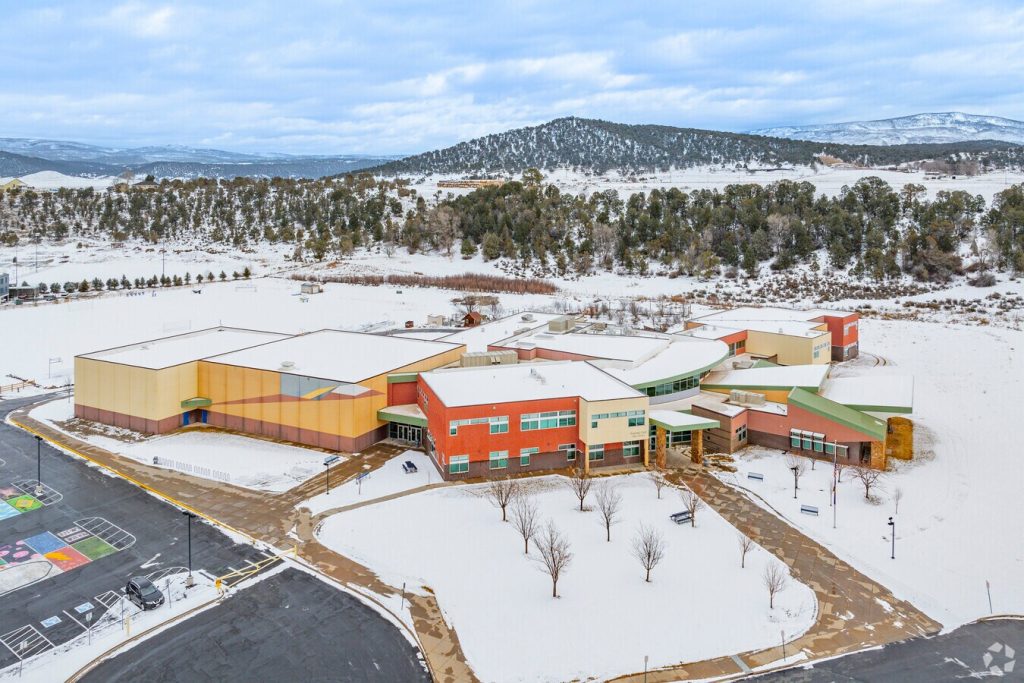
Through the AEM program, energy use in the district’s 10 school buildings is monitored on 15-minute intervals using special meters and a computer platform that can be viewed remotely. Utility bills are also collected and analyzed to compare energy use to national ENERGY STAR standards. That data is then used to recommend ways for building managers to improve efficiency and better manage energy use.
Key to that is programming the system settings during lower demand times when buildings are unoccupied, including nighttime hours, weekends, and holiday periods, said Bohmfalk.
“Our buildings are large … 60,000 to 70,000 square feet is a normal-sized school,” he continued. Just heating that big space for even an hour when it’s not needed adds up. CLEER and NET look at that interval data and help the District make some adjustments to the settings, sometimes saving $150 a day.
In just the first year of the pilot program, from July 2024 through November 2025, the District saw its electricity and natural gas costs fall by over $300,000.
“RFSD is demonstrating the amazing energy-saving power of full utilization of AEM, a program CLEER offers and is available to all GCE partners,” says Christina Matzl, energy and data analyst for CLEER.
A culture of conservation
The local school district has a rich history of energy conservation action, much of it student-led.
In 2010, a group of Crystal River Elementary School students from Carbondale, with the support of CLEER, GCE and NET, entered the Energy Star National Building Competition to bring energy-saving ideas and practices to their school. They took seventh place.
A few years later, many of those same students spearheaded the effort to build the district’s first school-based solar array at Roaring Fork High School, helping to offset electric utility costs. The district now has several ground-based and rooftop solar arrays in Basalt, Glenwood Springs, and Carbondale.
Over the years, the district has also implemented other energy conservation measures, such as LED lighting upgrades, installing motion sensors to automatically turn off lights in classrooms when no one is present, and monitoring building energy use so that other efficiencies can be made.
Then, the COVID-19 pandemic hit in 2020, and those savings literally went out the doors and windows in favor of stop-gap public health practices that emphasized greater air circulation and put building heating, ventilation, and air conditioning (HVAC) systems into hyper-drive.
Energy conservation practices have since resumed, and the Roaring Fork School District was quick to recognize the value and jump back on board.
Greater savings over time
Matzl says the District previously didn’t have the assistance to take a deep dive into some of the systems management that was really needed.
“Now they’re able to use that data to fine-tune their systems and really see the savings,” she said. “So, it’s a big step up from what they had pre-Covid.”
A lot of it also comes down to the personal practices of the buildings’ occupants.
“We’re trying to build a culture of energy conservation within the organization, and get everybody on board, from the HVAC techs and facility managers, to the custodians and teachers,” Matzl said.
It can be as simple as unplugging appliances and accessories, such as mini-refrigerators, microwave ovens, and space heaters, during off hours and longer school breaks, and especially over the summer, she said.
Holiday breaks when no one is in the buildings are key times to generate major savings. The team expects, during the upcoming holiday breaks, between employing those personal practices and the HVAC system adjustments, some buildings could see as much as a 40% reduction in energy use, Matzl said. Similar to the savings realized during spring break.
Bohmfalk said the next phase of implementation will involve putting systems controls in buildings that don’t yet have them. Over time, the savings should be even greater.
“The expertise that CLEER has provided on Advanced Energy Management is the only way that we could have moved forward to achieve the kinds of savings we’re talking about.”