
 It’s 100 degrees outside on a late August afternoon at Colorado Mesa University (CMU) in Grand Junction. But for those of us touring campus, we hardly notice because the geothermal cooling inside the buildings is working so well. We’re engineers, planners and energy experts from across the country to see one of Colorado’s quiet energy success stories: the university’s thermal energy network (TEN).
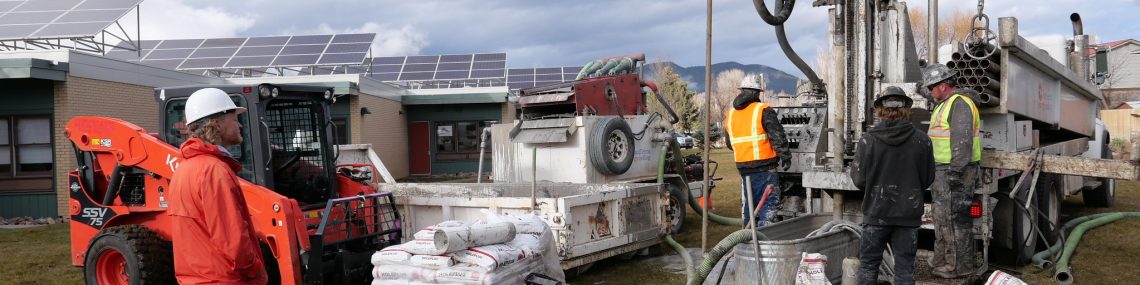
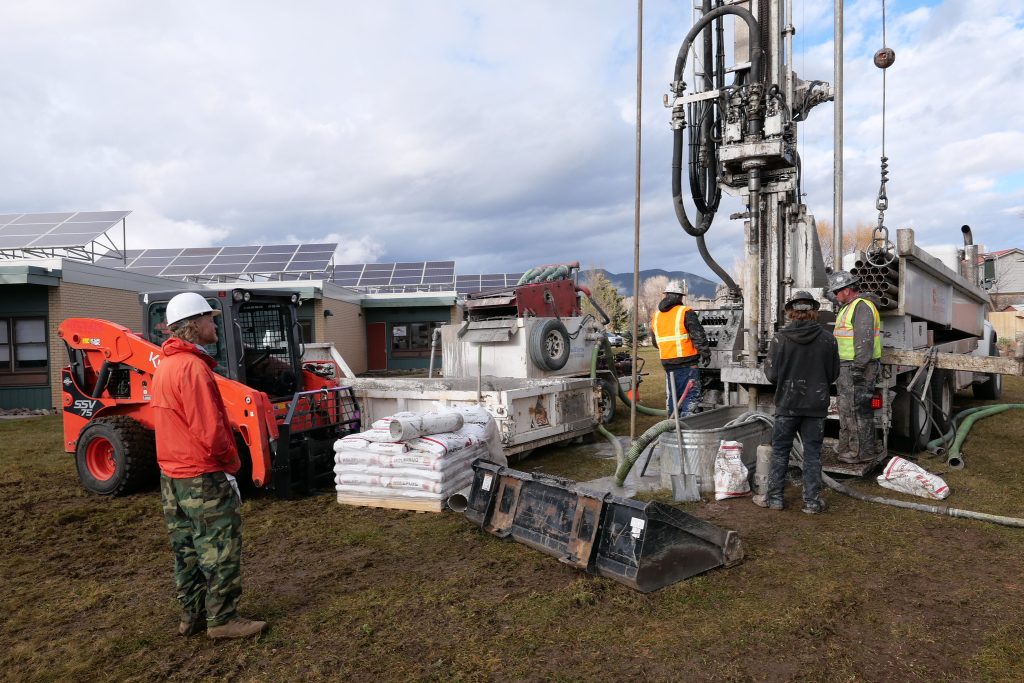
Beneath the sidewalks and lawns, a grid of borehole wells and pipes circulate water through the ground—pulling heat out of buildings in summer, delivering it back in winter and sharing it between differing building needs. The system serves nearly every building on campus, providing heating and cooling that’s 500% more efficient than typical systems and saving 60% of the water used by traditional chillers. With each campus expansion or renovation, new buildings are added to the network—proof that smart infrastructure pays back and keeps growing.
The system has been so effective that CMU has been able to reduce tuition and provide scholarships thanks to the energy savings generated. It saves the campus an estimated $1.8 million a year in utility costs.
We believe thermal energy networks could be one way to transform how Colorado heats and cools many homes, schools, and businesses. TENs and ground-source heat pumps (GSHPs) are among the most energy efficient technologies available today. By tapping into the stable temperature of the Earth just below the surface, they can achieve efficiencies of 400–700%, meaning one unit of electricity delivers four to seven units of energy out. Compare that to the most efficient gas boiler at 97% efficiency, and you can see the potential for energy savings in Garfield County.
Unlike air-source heat pumps, which rely on outdoor air and lose efficiency in extreme weather, ground-source systems use the constant temperature of the earth as their thermal “battery.” In a networked system, heat rejected from one building—say, an ice rink or grocery store—can be captured and shared with another that needs it.
In the world of ever increasing electricity load on our grids, you can also start to see that leveraging GSHPs into electrification projects can be a win for the customer and the electric utility. Holy Cross Energy has been working with its large accounts to pursue TENs and ground source heat pumps as an efficient pathway to electrification that, if planned correctly, could offer grid benefits and long term value.
CLEER, the nonprofit that manages the programs of Garfield Clean Energy, began working on geothermal solutions in 2023. This was through partnerships with the U.S. Department of Energy and the National Renewable Energy Laboratory (NREL). Since then, we’ve supported innovation across the region and the state, helping secure grants and advance on-the-ground projects through pre-development services, advocacy, and policy work. And we’re just getting started.
There are over 60 local governments and project developers in Colorado who are actively drilling test wells and running feasibility and design studies to build new TENs and geothermal generation by 2028. Carbondale, CLEER, Eagle County, Pitkin County, Vail and now the Aspen School District (ASD) are working on thermal energy networks. Donors and grantors, such as Holy Cross Energy, the Colorado Energy Office and Aspen CORE, are actively funding pre-development work. ASD’s proposed system could provide heating and cooling for more than 600,000 square feet of school facilities, improve indoor air quality, add cooling, and accommodate future interconnection with adjacent property owners.
The ground beneath our feet holds a powerful, practical energy solution. As more communities and campuses look to modernize heating and cooling infrastructure, thermal energy networks can turn waste heat into shared value.
If you’re developing a commercial, institutional, or multi-family project, we can help explore whether geothermal or a networked system is right for you. Contact us to learn more about designing efficient, resilient, and locally powered thermal systems.
Because sometimes the smartest way forward is right underfoot.